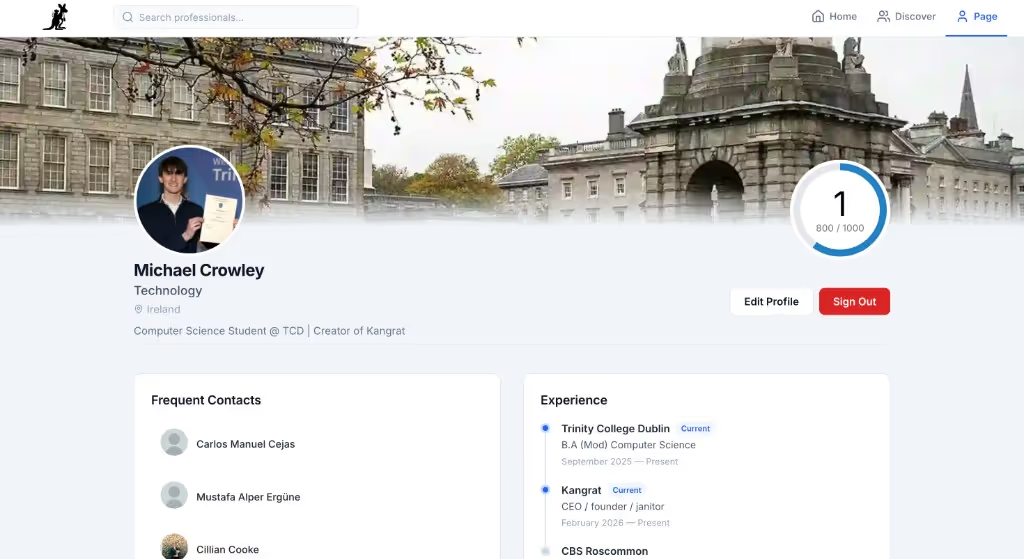
Kangrat started as an idea I had in February 2026. I had been trying to contact Trinity alumni working in roles I wanted to learn more about but it soon became clear that people in those positions were likely inundated with connection requests and cold messages. Working backwards from that problem, I thought outreach on LinkedIn and similar platforms would work better if the channel were less saturated with spam and more structured around genuine exchange.
Kangrat uses a gamified XP and levelling system to reward activity. Users who respond to questions regularly earn XP they can spend to ask questions of people at higher career levels. The project was my first end-to-end build of a social product. I used Firebase for the backend and React Native for the frontend. It was also my first extended use of Firebase and my first implementation of Algolia full-text search—probably over-engineered for the scale of the site, but a useful learning exercise.
I started building roughly two weeks before several major application deadlines. I deliberately limited my use of AI during development to a guide on how to understand how to approach unfamiliar tasks, rather than to generate solutions, as I wanted to retain more of the work myself. CSS was the main exception, since the output was easy to verify against what I wanted. To hit the deadline, I coded whenever I had a spare hour, including lunch breaks. This was a learning experience in itself as it was my first taste of an intense product sprint. The habit came in handy later at hackathons and when I was building my own startup.
Overall, the platform gained little traction beyond a handful of friends, largely because I had no time for promotion. I had planned to expand it into a B2B product for internal communication inside organisations, but that never happened and I moved on to other projects.